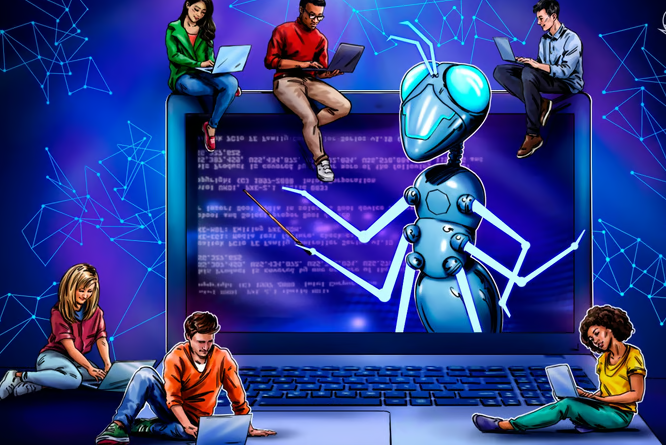
Artificial Intelligence and Machine Learning have made significant advancements in recent years, leading to the development of powerful large language models like ChatGPT, Claude, and GitHub Copilot. As these AI models become increasingly sophisticated at writing code, debugging programs, and generating algorithms, a major question continues to circulate across tech communities: Will ChatGPT replace software engineers and eliminate developer jobs in the software engineering industry?
In the software engineering industry, ChatGPT and other generative AI models can assist developers, accelerate code production, and streamline the development process, but they cannot replace human engineers entirely. Software engineering involves complex problem-solving, architectural design, security oversight, and user-centered reasoning that AI cannot replicate. This blog will explore the capabilities and limitations of ChatGPT, evaluate current job market trends, and discuss why software engineers remain essential in modern application development.
Who owns ChatGPT?
ChatGPT is an AI language model developed by OpenAI, an artificial intelligence research organization founded by a group of prominent entrepreneurs and researchers including Elon Musk, Sam Altman, Greg Brockman, Ilya Sutskever, John Schulman, and Wojciech Zaremba.
The company’s goal is to create safe and beneficial artificial general intelligence (AGI) that can be used for the betterment of humanity. OpenAI has been responsible for several major breakthroughs in machine learning, starting from early reinforcement learning models to the groundbreaking GPT-3 model, followed by multimodal systems like GPT-4, GPT-4o, and advanced reasoning models designed for complex mathematical and programming tasks.
While OpenAI owns the intellectual property behind ChatGPT, the model itself is accessible for public use through web interfaces, mobile applications, and extensive developer APIs that allow seamless integration into integrated development environments (IDEs), developer toolchains, and enterprise applications.
What are the risks of ChatGPT?

As an AI language model, ChatGPT is designed to minimize risks by adhering to strict safety protocols, alignment training, and ethical guidelines. However, like any emerging digital technology, using AI assistants introduces potential risks regarding data privacy, proprietary code exposure, and cybersecurity vulnerabilities.
When developers enter code or sensitive data into cloud-based AI tools, securing online traffic is paramount. Therefore, using a reliable VPN can add an extra layer of protection when using Best VPN for ChatGPT or any online developer tool.
It is important to choose a reputable VPN provider that values user privacy, end-to-end encryption, and security. Additionally, developers and organizations should be mindful of the information they share with AI prompts, enforcing strict data loss prevention policies to prevent accidental intellectual property leaks or malicious exploitation of generated code vulnerabilities. Overall, using ChatGPT with a trusted VPN and strong cybersecurity practices helps mitigate potential security risks and ensures a safe, secure workflow.
Moreover, while ChatGPT continues to improve rapidly, it is not capable of autonomously executing complete, end-to-end engineering projects such as full-scale web development, cloud architecture management, and complex application deployment without human oversight.
What language is used in ChatGPT?
Originally built upon the GPT-3.5 and GPT-4 transformer architectures, OpenAI created ChatGPT as a flagship large language model (LLM). It is trained on vast multi-terabyte datasets comprising natural language texts and public code repositories, utilizing deep neural networks based on the Transformer architecture.
The model is capable of processing, understanding, and generating human-like language across diverse computational tasks, such as automated language translation, technical question-answering, code generation, refactoring, and real-time text completion.
ChatGPT can understand and generate text in English and dozens of other global languages, as well as programming languages like Python, JavaScript, TypeScript, C++, Java, Rust, and Go. It is designed to interpret contextual user prompts, adapt to multi-turn conversation inputs, and continuously improve through fine-tuning and reinforcement learning from human feedback (RLHF).
How many jobs will ChatGPT replace?
ChatGPT is not intended to take the role of human workers, but rather to function as an intelligent productivity multiplier. However, there is no denying that AI and automation are transforming the job market across many technology sectors, including software engineering. Here are several key factors to consider regarding workforce automation and developer productivity:
It is difficult to predict exactly how many jobs will be replaced by AI and automation, as the overall impact depends on factors like corporate technology adoption rates, regulatory frameworks, and how rapidly engineering workflows evolve.
While early economic estimates suggested that up to 30% of routine workplace tasks could be automated over time, industry data shows that AI tool adoption actually boosts developer output by 30% to 55% rather than eliminating engineering headcount.
Furthermore, automation creates new specialized jobs, particularly in areas like AI safety engineering, prompt engineering, machine learning ops (MLOps), data pipeline architecture, and cybersecurity oversight.
In the case of ChatGPT, software development teams primarily deploy AI as an assistant to handle repetitive coding, unit testing, and documentation, leaving high-level strategic reasoning and complex application logic to human software engineers.
Do software engineers have a future?
Yes, software engineering remains a vibrant and essential career field, with long-term industry projections confirming continued growth. The demand for skilled software engineers remains exceptionally high across critical sectors, including healthcare, financial technology, cloud computing, and cybersecurity.
With the continued development of new software systems, distributed edge computing, and the increasing integration of technology into every aspect of modern enterprise operations, the systemic need for human software engineers will only continue to increase.
However, the nature of software development is shifting: software engineers must stay up-to-date with AI tools, learn hybrid development techniques, and continually expand their domain architecture skills to maintain a strong competitive edge in the modern tech career landscape.
Will ChatGPT replace junior developers?
While ChatGPT and other advanced language models can write boilerplate code, generate algorithm snippets, and assist with initial debugging, it is highly unlikely that they will completely replace junior developers in software engineering teams.
Junior developers bring critical human qualities to engineering teams, including personal creativity, nuanced problem-solving abilities, domain curiosity, and the capacity to collaborate effectively with cross-functional project teams.
ChatGPT and other language models excel at automating repetitive, predictable tasks, but they lack human intuition, ethical judgement, business context awareness, and real-world system design experience required to build secure, scalable, and resilient software applications.
In short, while technology is changing the day-to-day responsibilities of junior developers toward prompt interaction and code review, human software developers remain indispensable to the engineering ecosystem.
Conclusion
In conclusion, while ChatGPT and other generative AI technologies are becoming increasingly capable, it is clear that they will not replace software engineers in the foreseeable future. Instead, AI serves as a powerful collaborator that eliminates tedious boilerplate tasks and enables engineers to focus on higher-level architecture and creative problem-solving.
While AI can automate specific programming routines, successful software engineering requires strategic system design, product vision, business logic understanding, and human collaboration—qualities that AI models cannot replicate. AI works best alongside engineers, helping them write cleaner code faster and elevate the overall quality of software products.
Therefore, software engineers can look forward to a bright and dynamic future in the industry, taking on broader roles as system architects, technical leaders, and creative innovators in an AI-empowered development world.